

- 2 concepts · 2 revisions
- Color palette & typography
- Simple brand guidelines (PDF)
- Social banner (LinkedIn, X)
- Brand.md token file
Brand naming guide
A good brand name is an empty vessel.
Stop asking it to do everything.
The 7 naming categories, how to pass the radio test, and what to do when the exact .com is taken.
To name your brand, work through the seven naming categories to build a shortlist, run each option past the radio test and the common phonetic traps, and pick the one you can build equity on rather than the one that explains the most.
Most founders get stuck on naming because they expect the name to do the work of a whole marketing campaign.
They want a two-syllable word that explains their technology, signals trust, has an available five-letter .com, and gets universal approval from their group chat on day one.
That name does not exist. A brand name is not an explanation. It is an empty vessel that gets filled with reputation, consistency, and customer experience over time.
Here is how to think through the options systematically, avoid the phonetic traps, and pick a name you can actually build equity on.
The 7 brand name categories
When people brainstorm names, they tend to reach for the same handful of obvious terms. Structuring your ideas across recognized naming categories keeps you from staring at a blank notebook and forces you to explore different angles.
| Category | How it works | Trademark ease | Real-world examples |
|---|---|---|---|
| 1. Founder | Named after the people who started it | Moderate | Ford, Disney, Dell |
| 2. Descriptive | States exactly what the business or product does | Weakest | PayPal, Booking.com, The Weather Channel |
| 3. Fabricated | Completely invented or coined words | Strongest | Kodak, Xerox, Figma |
| 4. Metaphorical | Real words used suggestively to evoke a feeling or attribute | Strong | Apple, Amazon, Nike |
| 5. Acronym | Initials or letter abbreviations | Hard to defend early | IBM, BMW, SAP |
| 6. Compound | Joining two real words together into one new word | Moderate to high | Pinterest, Facebook, YouTube |
| 7. Borrowed / Shifted | Foreign roots, neologisms, or spelling tweaks | High | Uber, Lego, Monzo |
The gut feeling test
Think about tape. There are hundreds of adhesive tapes on the market. Why does Gorilla Tape stand out on a crowded hardware shelf?
Because the name communicates strength, grip, and durability before you ever open the packaging. It gives customers an immediate mental image.
Your name does not need to describe the technical architecture of your database or the algorithm behind your model. It needs to give the customer a clear mental box to place you in, so you do not vanish into the background noise.
The 4-part reality filter
Before falling in love with a name, run it through four practical checks. Most names that fail do so on basic mechanics, not a lack of cleverness.
1. The Radio Test and phonetics
If you tell someone your company name at a crowded dinner or on a podcast, can they spell it correctly into a search bar without asking you to repeat it?
Names with tricky silent letters, double consonants where people expect singles, or ambiguous vowel clusters create unnecessary friction. If you have to spell it out every single time you say it, that friction compounds over thousands of conversations.
2. The White Space check
Look at the top twenty companies in your category. What naming conventions are they all using?
In AI and developer tooling, entire cohorts of startups launch with the exact same suffixes and buzzwords. When everyone zigs toward technical descriptors, choosing a metaphorical or invented name creates instant contrast. You cannot be memorable if you sound like three of your direct competitors.
3. The domain and handle compromise
Do not kill a strong name just because the exact-match dot com is parked by a broker asking thirty thousand dollars.
Most modern tech and AI companies launch on extensions like .ai, .io, or .tech, or attach straightforward modifiers like brandai.com or getbrand.com. In software and AI, domains like .ai and .io have become industry standards that carry genuine credibility with technical buyers and investors.
Companies like Figma, Pocket, and Notion operated for years on alternate domains and modifiers before buying their clean primary dot com. Your customers care about what your product solves, not whether you paid a domain squatter on day one.
4. Trademark clearance
A name is only as good as your legal right to use it. Searching Google is not the same as clearing a trademark.
Check the USPTO database for identical or confusingly similar marks within your commercial class. For a detailed breakdown of how trademark distinctiveness works and how to protect your brand assets, read our guide on can you trademark an AI-generated logo.
Test your candidate name automatically
If you want a quick mechanical check on syllables, spelling traps, length, and phonetic friction, run your ideas through our free Startup Name Checker. It runs entirely in your browser and spots the practical traps before you commit.
A 60-minute naming exercise
Instead of waiting for inspiration to strike, run a structured sprint:
Step 1: Take the 7 categories above. Set a timer for 20 minutes and write down at least five candidate words for each category. Do not filter or judge them yet. Just fill the buckets.
Step 2: Narrow the list down to your top five candidates across all categories.
Step 3: Test each one against the Radio Test. Say it out loud in full sentences: "We just raised our seed round at [Name]" or "Check out [Name] for your team."
Step 4: Check USPTO clearance and see what domain modifiers make sense.
When to commit and move forward
At some point, you have to stop deliberating and start building. A good name will not save a product nobody wants, and a mediocre name rarely holds back a great one.
Once you have a clear name that clears the legal basics, you are ready to give it visual weight and structure. If you are wondering whether it is time to build out a complete visual system, see when should a startup invest in branding, explore what a full brand identity package includes, or check our available design packages below.
"I hired Sofiane for my web app, he did an amazing job with the branding, I love that he understood the whole scope and adapted to my needs"
"I came for a logo but ended up with brand assets too. I had a few ideas in mind, and Sof did those, but also created a direction that was super fun and fit me very well, even I didn’t know I needed that. Recommended!"
"Sofiane put a ton of care and effort into helping me rebrand my design studio. He was generous with his time, open to feedback, and genuinely invested in helping me find the right direction. His creative insight and advice gave me a much clearer vision for the brand. I’d recommend him to anyone looking for a thoughtful, dedicated designer who cares about their business."
how it works
Simple steps.
No stress.
- 1
Brief & Discovery
Right after you pay, you get a focused questionnaire. No discovery call, I start the moment you send it back.
- 2
Design
First concepts within 24-48 hours. Share your comments, I'll refine them.
- 3
Delivery
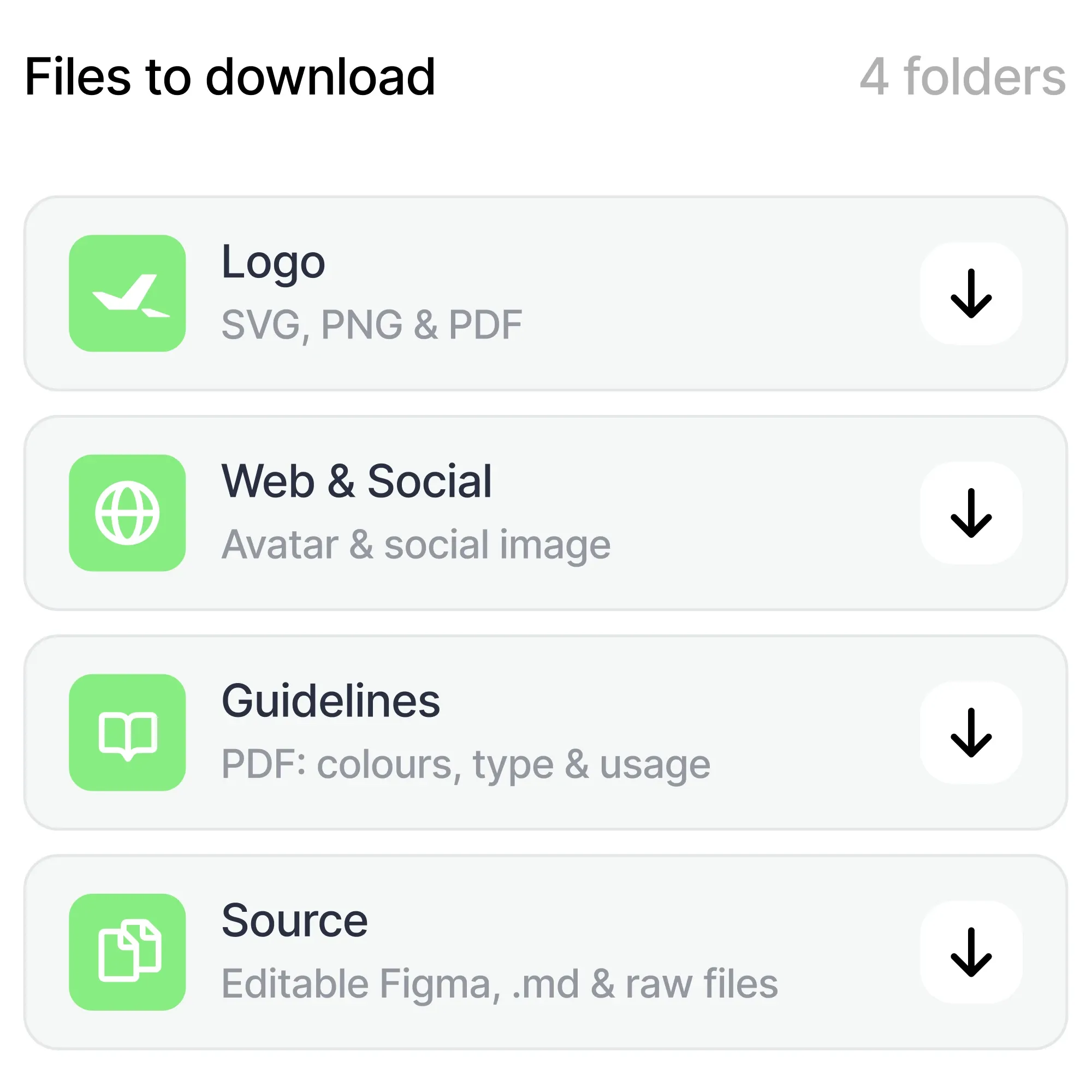
Every file you need: SVG, PNG, PDF, MD, Figma. Organized and yours to keep.
Pricing
Professional, without the agency price tag & faster.
Flexible plans, from logo design to identity systems and more. No quotes, no back-and-forth, choose one and I start today.
Essential is the logo and launch basics. Core is the full brand system.
- 3 concepts · 2 revisions
- Full logo system
- Color palette & typography
- Complete brand guidelines document
- Full social & profile assets
- Mockups
- Editable Figma + brand.md
Custom
From logo, branding & illustrations to a website live, tell me about your project and I'll scope it.
Custom
Let's talk- Illustrations
- Web design
- Web development
- Reviews
- Pitch deck
- Mockups
- Social media assets
- And more
You can select anything from this list. You can also send me an email to talk about your problem and I'll scope it.
How do I come up with a brand name?
Work through the seven naming categories rather than brainstorming at random: founder, descriptive, fabricated, metaphorical, and the rest. Each one forces a different angle, so you end up with a shortlist instead of five variations of the same obvious word. Then test each candidate out loud and check trademark availability before you get attached.
What makes a good brand name?
It is easy to say, easy to spell after hearing it once, and distinct enough in your category to own. It does not have to explain what you do. A name is an empty vessel that fills with reputation over time, so pick one you can build equity on rather than one that describes the product you sell today.
Should my brand name describe what I do?
Usually not. Descriptive names are the weakest to trademark, because you are trying to claim ordinary words in your own category. They also box you in the moment the product changes. Apple, Figma and Nike describe nothing, and that is why they had room to grow.
Should I buy the expensive .com before launching?
Almost never. Most tech and AI startups launch on .ai, .io, or a modifier like brandai.com. Spend your budget validating the product first, you can buy the clean .com once you have revenue.
Invented word or real dictionary word, which is better?
Both work, but they demand different tradeoffs. An invented word like Figma or Spotify is easy to trademark and secure domains for, but you have to invest effort educating people on what it means. A real word like Apple or Square carries instant familiarity, but requires creative metaphor and is harder to clear legally.
What if everyone on our team has a different favorite name?
Voting usually leads to bland compromises. Instead of asking what people like, score candidate names against objective criteria: pronounceability, trademark availability, searchability, and whether it stands out against competitors in your specific niche.
Can I change my startup name later if it does not work out?
Yes, and many successful companies did. Relicensing domains, updating trademarks, and resetting customer recognition gets more expensive the longer you wait, but an imperfect name should never stop you from shipping version one.