Most founders end up with a generic logo because they built it themselves in Canva or copied their competitors. That makes it almost impossible to stand out in your market and carve out your own space. Follow this guide to learn how to design a logo the right way.
A good logo only has 1 goal: to identify the brand, so being memorable and different from the competition is a must. Based on my experience working with multiple clients, it doesn’t need to explain what your business does, trying to do that is actually one of the most common reasons logos end up looking generic.
Note: This guide focuses specifically on designing the logo mark: the symbol or icon. Typography, color, and the full brand system are a separate process.
Step 1: Start with brand strategy
Before touching any tool, you need a brand strategy in place. Having a strategy behind your design dramatically increases its chances of succeeding in the market.
A complete brand strategy covers many elements: purpose, mission, vision, values, positioning, competition, personality, identity, and the tone of voice the brand uses to express itself.
That’s a lot of work. At the start, the most important elements are your audience, your competition, your purpose, your positioning, and your values. That already gives you a strong base to work from.
Here are some questions that help you get to know a brand before designing anything:
- What is the product?
- What problem does it solve?
- How is it better than competitors?
- Who is the target audience?
- What are their pain points?
- What does their profile look like?
- What is the brand’s mission?
- What are your values?
- If the brand were a person, what would their personality and characteristics be?
- Are there colors you particularly like or feel connected to?
- Are there colors you hate?
- Do you have a specific idea in mind?
- What logos do you like?
Step 2: Research and gather inspiration
Surrounding yourself with the right references gives you ideas and helps you make creative connections. The references you use should always align with your brand strategy.
It’s also important to study your competitors visual identities, so you can stand apart and create something different. If every brand in your space uses the same colors, that’s your signal to go somewhere else entirely.
For good references, I recommend Cosmos, Pinterest, Brand Archive, and Logobook.
Step 3: Sketch before you open any software
Based on my experience designing multiple logos, one of the most intuitive ways to start is with a keyword exercise.
Write a list of words that belong to the brand, then create connections to other words. This opens up your thinking and surfaces ideas you wouldn’t have found otherwise.
From there, grab a pen and paper and draw whatever comes to mind.
No judgment, no fear. In the beginning it’s completely normal to sketch things that already exist or don’t look great, that’s not the point. The goal is to relax and let your imagination lead you to places you didn’t expect.
A great way to push toward something unique is to pick 2 or 3 keywords from your list that represent an object or concept you can draw. Here are two examples.
Example 1: rocket, aim upward, speed
With these three words you already have multiple directions.
For “rocket” you could draw a rocket, more or less abstract. For “aim upward” you could use an upward arrow. For “speed” you could use a lightning bolt, or if you’re working with typography, italic lettering to suggest motion.
The ideas might seem basic at first, but they’re a solid starting point to build from. You can also mix concepts: a rocket built from an arrow, an arrow that becomes a lightning bolt. That’s where distinctive logos start to emerge.
Example 2: mythical creature, sleep
When you think of mythical creatures, most people go straight to dragons, phoenixes, unicorns. And sleep brings to mind words like relaxing, restorative, comforting.
But combine the two and you start moving in a more unexpected direction. Are there mythological figures connected to sleep? Hypnos, the Greek god of sleep. Somnus, his Roman counterpart. A winged god, wings! They suggest freedom, floating, the feeling of drifting in a dream, etc.
From there the associations keep building. A winged creature carrying the cycle of the sun and moon. The celestial rhythm of sleep and waking. You could imagine a brand mark, a winged figure holding the sun and moon, that also works dynamically in an app, switching between sun and moon depending on the time of day.
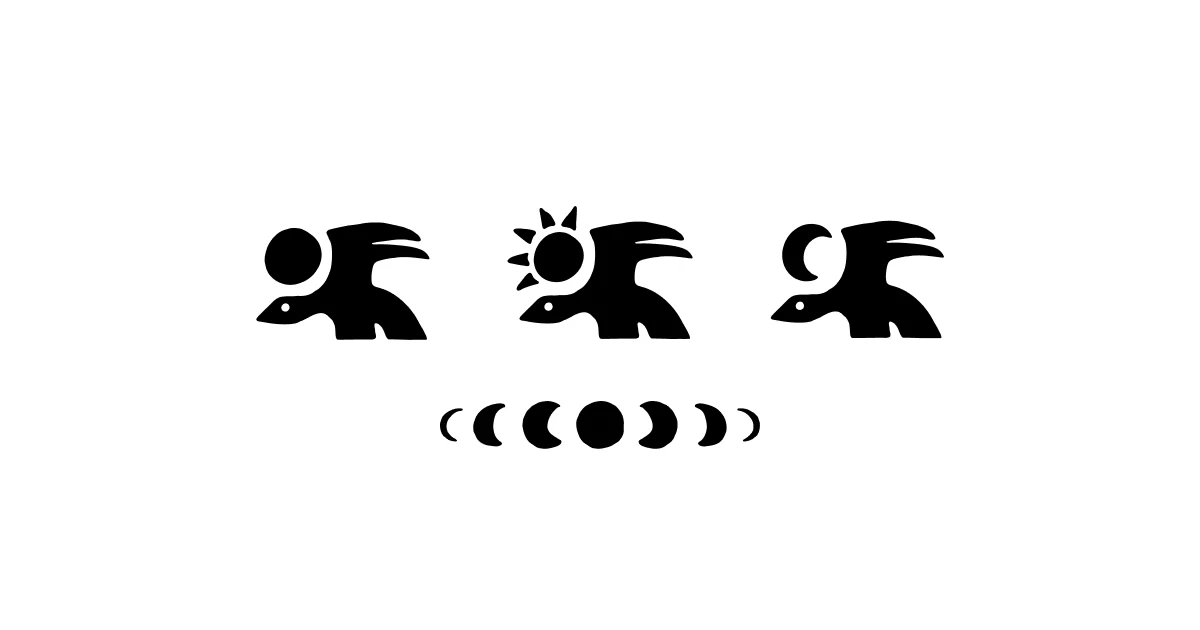
That’s how you get from a list of words to something genuinely original.
After spending time with this, and it can take several hours, you should have a few interesting directions to work with. The next step is to refine them, first on paper or similar (I use an iPad with the app Procreate), then inside a vector tool.
Once your logo is clean in the vector software, test it across different contexts. I recommend symbl.space, just export your SVG or PNG and it shows you how your logo renders across multiple real-world applications.
Conclusion
Designing a logomark can seem simple, it’s just a mark, after all. But a logo that stands the test of time needs to be built on strategy, research, and intentional decisions.
If you want to design your logo yourself, now you have the process. If you’d rather have it done for you, let’s talk about a brand identity that’s built from scratch around your business.